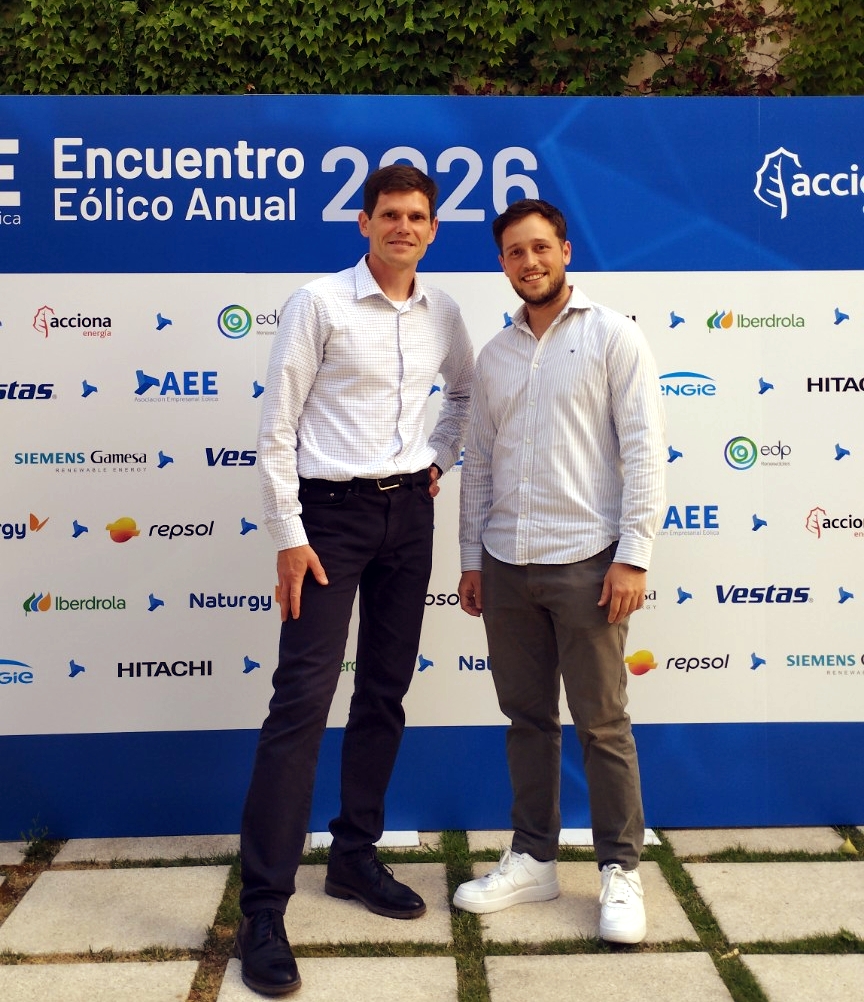
Last Wednesday, 8 July, Terra Eólica had the honour of being represented at the Annual Wind Energy Meeting 2026, organised by the Spanish Wind Energy Association — AEE in Madrid, one of the most relevant events for the wind energy sector in Spain.
The meeting brought together institutional representatives, companies, sector professionals and municipalities committed to the development of wind energy, with a clear focus on one key message: the energy transition can only move forward solidly if it is built through dialogue with the territory, cooperation with local councils and the creation of real value for local communities.
During the event, the AEE Wind Energy Yearbook 2026 was also presented. It is available at the following link. This document is a reference publication for understanding the current situation of the wind energy sector in Spain, its main challenges and its strategic role in the country’s energy, industrial and territorial transformation. AEE highlights that wind energy covers approximately 24% of the energy consumed in Spain, with 31,679 MW of installed capacity, 1,412 wind farms located in 868 municipalities, as well as 287 manufacturing centres distributed across 16 of Spain’s 17 autonomous communities and more than 37,000 jobs linked to the sector. These figures reinforce one of the main ideas of the meeting: wind energy is not only a power generation technology, but also an industrial, territorial and social infrastructure capable of promoting employment, economic activity, innovation and local development.
One of the central topics of the event was precisely the role of municipalities in the energy transition and the importance of building a relationship of trust between wind energy projects, local administrations and rural communities. One of the most outstanding examples was the municipality of Tordesillas, in the province of Valladolid, recognised with the EOLO 2026 Award for Rural Integration of Wind Energy for its commitment to a model of energy development integrated into the rural environment and for the positive impact generated in the municipality. The award was collected by its mayor, Miguel Ángel Oliveira, during the ceremony held in Madrid.
The experience of Tordesillas shows how the implementation of renewable energy projects can be accompanied by concrete benefits for the municipality. In this case, the collaboration between the Town Council and the company Nadara, responsible for the wind farm located on the Carrecastro hill, was highlighted, together with support for the enhancement of archaeological heritage, training, and cultural, social and business activities in the municipality.
During the meeting, Ilia Panov, representing Terra Eólica, had the opportunity to speak with the mayor of Tordesillas about this experience. The conversation underlined the value of sharing good practices between municipalities that already coexist with wind energy projects and those that are beginning to analyse new opportunities linked to renewable energy. The mayor expressed his willingness to exchange experiences with other municipalities, should there be interest or need from them.
Another of the most relevant moments of the day was the intervention of Jorge Luque Illescas, Director General for Forest Fire Management of Andalusia, who shared the Andalusian experience of collaboration between the wind energy sector and forest fire prevention and management services.
His speech showed how wind energy companies can contribute in a very concrete way to the protection of the territory: by supporting prevention, risk assessment, early detection of fire outbreaks and the maintenance of access infrastructure that enables emergency teams and equipment to reach affected areas. This experience demonstrates that the presence of wind energy facilities, when responsibly integrated into the territory, can generate benefits that go far beyond electricity production.
At Terra Eólica, we believe that the examples of Tordesillas and Andalusia are directly connected with the messages of AEE’s Wind Energy Yearbook 2026: wind energy development must advance not only through technical capacity, available resources or energy planning, but also through local trust, institutional cooperation and the creation of visible benefits for the territory.
Spain has a solid wind energy base, distributed both industrially and territorially. However, the future of the sector will also depend on its ability to listen to municipalities, explain projects better, share real experiences and adapt solutions to the needs of each local community.
In this context, AEE is promoting the Joint Declaration of Wind Energy and Municipalities for Sustainable Local Development, an initiative which, according to the material presented during the event. Terra Eólica encourages all municipalities interested in wind energy, rural development and the energy transition to join this dialogue. We believe that sharing real experiences, listening to local needs and building projects with a territorial vision is the best way to move towards a fair, sustainable and beneficial energy transition for everyone.
Terra Eólica thus reaffirms its commitment to well-integrated renewable energy, based on knowledge of the territory, cooperation with local stakeholders and the creation of value for municipalities.
The meeting brought together institutional representatives, companies, sector professionals and municipalities committed to the development of wind energy, with a clear focus on one key message: the energy transition can only move forward solidly if it is built through dialogue with the territory, cooperation with local councils and the creation of real value for local communities.
During the event, the AEE Wind Energy Yearbook 2026 was also presented. It is available at the following link. This document is a reference publication for understanding the current situation of the wind energy sector in Spain, its main challenges and its strategic role in the country’s energy, industrial and territorial transformation. AEE highlights that wind energy covers approximately 24% of the energy consumed in Spain, with 31,679 MW of installed capacity, 1,412 wind farms located in 868 municipalities, as well as 287 manufacturing centres distributed across 16 of Spain’s 17 autonomous communities and more than 37,000 jobs linked to the sector. These figures reinforce one of the main ideas of the meeting: wind energy is not only a power generation technology, but also an industrial, territorial and social infrastructure capable of promoting employment, economic activity, innovation and local development.
One of the central topics of the event was precisely the role of municipalities in the energy transition and the importance of building a relationship of trust between wind energy projects, local administrations and rural communities. One of the most outstanding examples was the municipality of Tordesillas, in the province of Valladolid, recognised with the EOLO 2026 Award for Rural Integration of Wind Energy for its commitment to a model of energy development integrated into the rural environment and for the positive impact generated in the municipality. The award was collected by its mayor, Miguel Ángel Oliveira, during the ceremony held in Madrid.
The experience of Tordesillas shows how the implementation of renewable energy projects can be accompanied by concrete benefits for the municipality. In this case, the collaboration between the Town Council and the company Nadara, responsible for the wind farm located on the Carrecastro hill, was highlighted, together with support for the enhancement of archaeological heritage, training, and cultural, social and business activities in the municipality.
During the meeting, Ilia Panov, representing Terra Eólica, had the opportunity to speak with the mayor of Tordesillas about this experience. The conversation underlined the value of sharing good practices between municipalities that already coexist with wind energy projects and those that are beginning to analyse new opportunities linked to renewable energy. The mayor expressed his willingness to exchange experiences with other municipalities, should there be interest or need from them.
Another of the most relevant moments of the day was the intervention of Jorge Luque Illescas, Director General for Forest Fire Management of Andalusia, who shared the Andalusian experience of collaboration between the wind energy sector and forest fire prevention and management services.
His speech showed how wind energy companies can contribute in a very concrete way to the protection of the territory: by supporting prevention, risk assessment, early detection of fire outbreaks and the maintenance of access infrastructure that enables emergency teams and equipment to reach affected areas. This experience demonstrates that the presence of wind energy facilities, when responsibly integrated into the territory, can generate benefits that go far beyond electricity production.
At Terra Eólica, we believe that the examples of Tordesillas and Andalusia are directly connected with the messages of AEE’s Wind Energy Yearbook 2026: wind energy development must advance not only through technical capacity, available resources or energy planning, but also through local trust, institutional cooperation and the creation of visible benefits for the territory.
Spain has a solid wind energy base, distributed both industrially and territorially. However, the future of the sector will also depend on its ability to listen to municipalities, explain projects better, share real experiences and adapt solutions to the needs of each local community.
In this context, AEE is promoting the Joint Declaration of Wind Energy and Municipalities for Sustainable Local Development, an initiative which, according to the material presented during the event. Terra Eólica encourages all municipalities interested in wind energy, rural development and the energy transition to join this dialogue. We believe that sharing real experiences, listening to local needs and building projects with a territorial vision is the best way to move towards a fair, sustainable and beneficial energy transition for everyone.
Terra Eólica thus reaffirms its commitment to well-integrated renewable energy, based on knowledge of the territory, cooperation with local stakeholders and the creation of value for municipalities.